By Michael McDonough BBC News website
"I don't want to be gay anymore. When I go out to buy bread, I'm afraid. When the doorbell rings, I think that they have come for me."
That is the fear that haunts Hussein, and other gay men in Iraq.
They say that since the US-led invasion, gay people are being killed because of their sexual orientation.
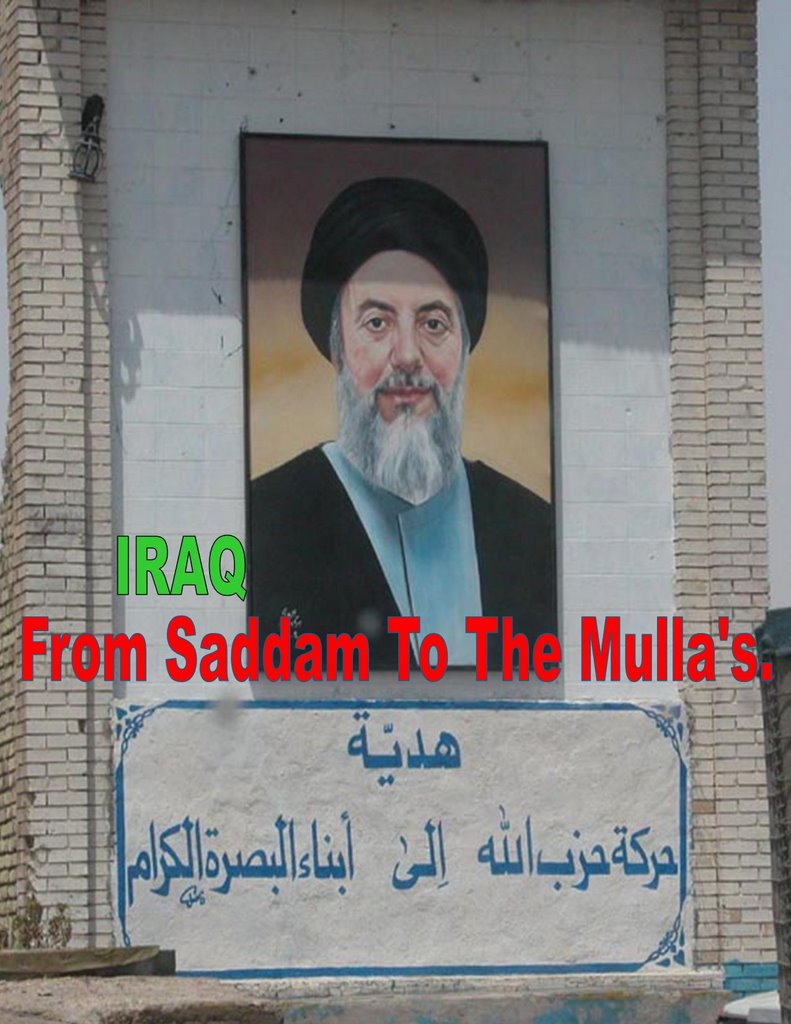
They blame the increase in violence on the growing influence of religious figures and militia groups in Iraq since Saddam Hussein was ousted.
Islam considers homosexuality sinful. A website published in the Iranian city of Qom in the name of Ayatollah Sistani, Iraq's most revered Shia cleric, says: "Those who commit sodomy must be killed in the harshest way".
Sistani's official website calls for gay men to be executed:
http://www.sistani.org/html/ara/main/index-istifta.php?page=4&lang=ara&part=4
"The statement appears in Arabic section of the website, in a section dealing with questions of morality, but not in the English-language equivalent.
The BBC asked Mr Sistani's representative, Seyed Kashmiri, to explain the ruling.
"Homosexuals and lesbians are not killed for practising their inclinations for the first time," Mr Kashmiri said in a response sent via email.
"There are certain conditions drawn out by jurists before this punishment can be implemented, which is perhaps similar to the punishment meted out by other heavenly religions."
Mr Kashmiri added: "Some rulings that are drawn out by jurists are done so on a theoretical basis. Not everything that is said is implemented."
Violent attacks
Killings and kidnappings are widespread in Iraq, with much of the bloodshed being linked to sectarian tensions and the anti-US insurgency.
But homosexual Iraqis who have spoken to the BBC say they are also being targeted because of their sexual orientation.
Hussein is 32 and lives in Baghdad with his brother, sister-in-law and nieces.
He says his effeminate appearance and demeanour make him stand out and attract hostility.
"My brother's friends told him: 'In the current chaos you could get away with killing your brother without retribution and get rid of this shame,'" Hussein said, after agreeing to speak to the BBC only if his real name was not used.
A transsexual friend of his, who had changed names from Haydar to Dina, was killed on her way to a party in Baghdad about six months ago, Hussein said.
Gym terror:
Ahmed is a 31-year-old interior decorator who used to live in Baghdad with his boyfriend, Mazin.
Ahmed fled to Jordan nine months ago after Mazin was murdered outside a gym.
After his partner was shot dead, Ahmed hid in the gym toilets then slipped away and later flew to Amman, the Jordanian capital.
He says it was well known that they were a couple and Mazin was targeted because of his sexuality.
"I fled from Iraq because of the threat to my life, because I was a gay man," he told the BBC.
Ahmed also said that, before the gym shooting, he and a gay friend had survived a grenade attack and he still had fragments of shrapnel in his face.
The friend was killed a week later by gunmen who raided his house, he added.
Powerful militia Iraq's deputy interior minister Maj Gen Hussein Kamal told the BBC that he was unaware of any minority groups being specifically targeted for kidnappings and killings.
He also said he was unaware of the statement on Ayatollah Sistani's website calling for gay people to be killed.
But he added: "We do not condone vigilante action. We encourage the victims to inform the authorities if they are subjected to any attacks."
However, Hussein says gay people are afraid of the police.
The Interior Ministry is run by members of Supreme Council for the Islamic Revolution in Iraq (Sciri), which is one of Iraq's country's leading Shia parties.
Sciri has its own militia, the Badr Brigades, and there are widespread concerns that large parts of Iraq's police force are under the control of such groups.
Hussein blames the Badr Brigades and other Shia militia for many of the attacks on gay Iraqis.
Saddam was a tyrant, but at least we had more freedom then " Hussein add"
Human rights group Amnesty International has focused most of its work in Iraq on the high levels of violence linked to the insurgency.
The organisation said it had no information on reports of anti-gay activities in the country.
"It is not an area that we have been actively looking at, but that is not to say that we will not look into the issue at some point," said a spokesman at the group's London headquarters.
But Hussein, Ahmed and gay activists outside Iraq say there is clear evidence that the situation has deteriorated dramatically for Iraqi homosexuals.
"Saddam was a tyrant, but at least we had more freedom then," said Hussein. "Nowadays, gay men are just killed for no reason."
Arabic interviews by Muhayman Jamil
http://news.bbc.co.uk/1/hi/world/middle_east/4915172.stm

Ali must travel!
Iraqi LGBT is being blocked from advocating for the group by the UK government — find out how you can help.
Thursday, April 20, 2006
U.N. agency confirms gay Iraqi's targeted for kidnapping and murder
U.N. AGENCY CONFIRMS GAY IRAQIS TARGETED FOR KIDNAPPING AND MURDER
13 April 2006 - Gay City News, New York
By Doug Ireland
A report from the United Nations Office for the Coordination of Humanitarian Affairs (UNOCHA) has confirmed that gay Iraqis have been targeted for kidnapping and murder because of their sexual orientation.
This U.N. report, released April 10 by the UNOCHA‘s IRIN news and information service, described the widespread increase in kidnappings for ransom and the subsequent killings of university professors and teachers—350 in the past five months alone—and quoted Iraqi Interior Ministry official Ra’ad Hassan as saying that “roughly 50 kidnappings take place countrywide every day.”
Hassan also told the U.N. office, “Since January, the number of kidnappings has increased unabated, along with attacks and threats against certain communities.”
The U.N. report said that Iraq’s gay community is one of those targeted “for reasons other than ransom money,” and said that one local non-governmental organization reported that “members of Iraq’s small gay community had received more than 70 threats from kidnappers in the past two months, while 12 have been killed.”
The U.N. report quoted Mustafa Salim, spokesman for a local Iraqi gay organization called Rainbow for Life, as saying, “We’re trying to help these people, but it’s getting very difficult, and our organisation has been targeted twice since last month. We know for certain that those killed were targeted because of their sexual preferences.”
This U.N. report reinforces this reporter’s earlier exposé of the systematic campaign of kidnapping and murder targeting Iraqi gays following the death-to-gays fatwa issued last October by Grand Ayatollah Ali al-Sistani , spiritual leader of Iraq’s Shi’ite Muslims (“Shia Death Squads Target Iraqi Gays,” GCN, March 23-29).
That attributed the sequestrations and killings of Iraqi gays to death squads of the Badr Corps, the Iranian-financed military arm of the Supreme Council for the Islamic Revolution in Iraq, the country’s most powerful Shi’ite political group.
While the U.N. report does not mention the Badr Corps—no doubt for political reasons having to do with a desire not to offend Shi’a religious and political authorities—it does confirm that Iraqi gays are under serious and organized attack,
In this week's issue of the famous French investigative-satirical weekly Le Canard Enchainé, an article by David Fontaine reprises and credits GCN report on the anti-gay Iraqi death squads
http://direland.typepad.com/direland/2006/04/un_agency_confi.html
13 April 2006 - Gay City News, New York
By Doug Ireland
A report from the United Nations Office for the Coordination of Humanitarian Affairs (UNOCHA) has confirmed that gay Iraqis have been targeted for kidnapping and murder because of their sexual orientation.
This U.N. report, released April 10 by the UNOCHA‘s IRIN news and information service, described the widespread increase in kidnappings for ransom and the subsequent killings of university professors and teachers—350 in the past five months alone—and quoted Iraqi Interior Ministry official Ra’ad Hassan as saying that “roughly 50 kidnappings take place countrywide every day.”
Hassan also told the U.N. office, “Since January, the number of kidnappings has increased unabated, along with attacks and threats against certain communities.”
The U.N. report said that Iraq’s gay community is one of those targeted “for reasons other than ransom money,” and said that one local non-governmental organization reported that “members of Iraq’s small gay community had received more than 70 threats from kidnappers in the past two months, while 12 have been killed.”
The U.N. report quoted Mustafa Salim, spokesman for a local Iraqi gay organization called Rainbow for Life, as saying, “We’re trying to help these people, but it’s getting very difficult, and our organisation has been targeted twice since last month. We know for certain that those killed were targeted because of their sexual preferences.”
This U.N. report reinforces this reporter’s earlier exposé of the systematic campaign of kidnapping and murder targeting Iraqi gays following the death-to-gays fatwa issued last October by Grand Ayatollah Ali al-Sistani , spiritual leader of Iraq’s Shi’ite Muslims (“Shia Death Squads Target Iraqi Gays,” GCN, March 23-29).
That attributed the sequestrations and killings of Iraqi gays to death squads of the Badr Corps, the Iranian-financed military arm of the Supreme Council for the Islamic Revolution in Iraq, the country’s most powerful Shi’ite political group.
While the U.N. report does not mention the Badr Corps—no doubt for political reasons having to do with a desire not to offend Shi’a religious and political authorities—it does confirm that Iraqi gays are under serious and organized attack,
In this week's issue of the famous French investigative-satirical weekly Le Canard Enchainé, an article by David Fontaine reprises and credits GCN report on the anti-gay Iraqi death squads
http://direland.typepad.com/direland/2006/04/un_agency_confi.html


Wednesday, April 19, 2006
Shia death squads target Iraqi gays -- U.S. indifferent
SHIA DEATH SQUADS TARGET IRAQI GAYS -- U.S. Indifferent
23 March 2006 - Gay City News -- New York's largest gay weekly newspaper
By Doug Ireland
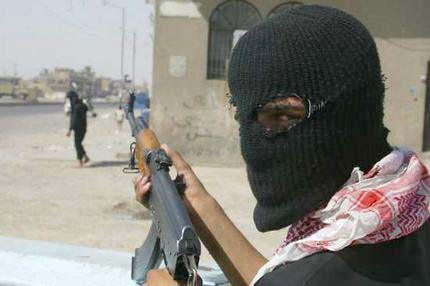
Following a death-to-gays fatwa issued last October by Grand Ayatollah Ali al-Sistani, death squads of the Badr Corps have been systematically targeting gay Iraqis for persecution and execution, gay Iraqis say. But when they ask for help and protection from U.S. occupying authorities in the “Green Zone,” gay Iraqis are met with indifference and derision.
“The Badr Corps is committed to the ‘sexual cleansing’ of Iraq,“ says Ali Hili, a 33-year-old gay Iraqi exile in London who, with some 30 other gay Iraqis who have fled to the United Kingdom, five Years ago founded the Abu Nawas Group there to support persecuted gay Iraqis (Abu Nawas was a great 8th century classical poet of Arab and Persian descent who is known throughout Middle East cultures, and is famous for his poems in praise of same-sex love.)
Said Hili, “We believe that the Badr Corps is receiving advice from Iran on how to target gay people.” In the Islamic Republic of Iran, the regime of President Mahmoud Ahmadinejad has been carrying out a lethal anti-gay pogrom against Iranian gays, notably through entrapment by Internet -- and this tactic has recently begun to be used by the Badr Corps in Iraq to identify and hunt down Iraqi gays.
The well-armed Badr Corps is the military arm of the Iranian-backed Supreme Council of the Islamic Revolution in Iraq (SCIRI), the powerful Shia group that is the largest political formation in Iraq’s Shia community, which was head quartered in Tehran until Saddam Hussein‘s fall. The SCIRI’s Badr Corps is trained and commanded by former Iraqi army officers.
The Ayatollah Sistani, the 77-year-old Iranian-born cleric who is the supreme Shia authority in Iraq, is revered by SCIRI as its spiritual leader. His anti-gay fatwa (available on Sistani’s official website) says that “people involved” in homosexuality “should be killed in the worst, most severe way of killing.”
Speaking by telephone from London, the Abu Nawas Group's Hili said that “there is a very, very serious threat to life for gay people in Iraq today. We are receiving regular reports from our extensive network of contacts with underground gay activists and gay people in Iraq -- intimidation, beatings, kidnappings and murders of gays have become an almost daily occurrence. The Badr Corps was killing gay people even before the Ayatollah’s fatwah, but Sistani’s murderous homophobic incitement has given a green light to all Shia Muslims to hunt and kill lesbians and gay men.”
Hili says,”Badr Corps agents have a network of informers who, among other things, target alleged 'immoral behavior'. They kill gays, unveiled women, prostitutes, people who sell or drink alcohol, and those who listen to western music and wear western fashions.
"Badr militants are entrapping gay men via internet chat rooms. They arrange a date, and then beat and kill the victim. Males who are unmarried by the age of 30 or 35 are placed under surveillance on suspicion of being gay, as are effeminate men. They will be investigated and warned to get married. Badr will typically give them a month to change their ways. If they don't change their behavior, or if they fail to show evidence that they plan to get married, they will be arrested, disappear and eventually be found dead. The bodies are usually discovered with their hands bound behind their back, blindfolds over their eyes, and bullet wounds to the back of the head.”
Tahseen is an underground gay activist in Iraq, and a correspondent there for the British Abu Nawas Group. A 31-year-old photography lab technician, Tahseen told me by telephone from Baghdad this weekend that, “Just last week, four gay people we know of were found dead. I am afraid to leave my room and go out in the street because I will be killed. We all live in fear.“ Tahseen said that men who seem obviously gay “cannot walk in the street. My best friend was recently killed for being gay.”
Tahseen confirmed the murderous efficiency of the Badr Corps’ Internet entrapment program. “Within one hour after they meet a gay person in an Internet chat room, that person will disappear and be found dead,” he said, adding that “since Sistani’s fatwa, the life of a gay person is worth nothing here, and the violence and killings have gotten much, much worse.”
Tahseen lives in a Baghdad apartment with his two brothers. “Right now, I have five gay men hiding in my room in fear of their lives, because they cannot go outside without risking being killed,” he said, with anguish audible in his voice. “They are all listening to me as I speak with you.” All those hiding with Tahseen are in their late twenties or early thirties, and by their mannerisms would be easily identified as gay by most Iraqis. I spoke briefly with one of them, who expressed his fear in a soft, shy voice.
One of those being given refuge by Tahseen is Bashar, a 34-year-old stage actor, who was forced to go into hiding after receiving death threats against him and his family. Before he went underground, his house was raided several times by the Badr Corps. Fortunately, he was not at home, otherwise he fears he would have been kidnapped and killed.
“We desperately need protection!” pleaded Tahseen. “But, when we go to the Americans, they laugh at us and don’t do anything. The Americans are the problem!” The Abu Nawas Group’s Hili confirmed from London that representations to officials of the U.S. occupation in Baghdad’s famous “Green Zone” had been made by underground gay activists, only to be met with disdain and indifference.
Hili, who has a bachelor’s degree in English literature, and who used to work for Iraqi radio and television, fled to the U.K. in 2002 after having been persecuted for being gay under Saddam Hussein. “In the late ‘80s and early 90s there were a couple of gay clubs in Baghdad, but they were all shut down in 1993 after sanctions were imposed against Saddam’s regime and Iraq.
"We had a weekly gay nightclub in the Palestine Hotel that became the gathering place for gay people, especially for actors and others in the entertainment world, but it, too, was shut down.
"I was arrested three times for being gay, and tortured. After several attempts, I finally was able to escape the country, going first to Dubai, then Jordan, then Syria, and finally reaching England.” Now, Hili says, he is heartbroken to see that, three years after Saddam’s fall, life for gay people in Iraq is even more unbearable than before.
“Just last night I spoke via Internet with a young gay man in his mid-20s who was caught by SCIRI agents. He had no identification with him -- gay people are afraid to carry their I.D.s when they go in the street in case they are caught,” because both the police and the Badr Corps agents would inform their families and add them to a list of known homosexuals, which would be used later to target them for killing.. “This young man had his left arm broken by the SCIRI thugs -- I saw this with my own eyes via Internet camera,” Hili said.
Hili said the Abu Nawas Group is accumulating evidence that Iranian agents are advising SCIRI and the Iraqi police on how to implement anti-gay persecution. Not only has Iran’s Internet entrapment campaign targeting gays been adopted in Iraq, he says, but there are reports that Iranian agents have been involved in interrogations, questioning those arrested in Persian through translators. “This is particularly true in Basra in the south,” Hili says.
Hili provided information on the cases of several gay victims of the Badr Corps, but said, “"These killings are just the ones we have been able to get details about. They are the tip of an iceberg of religious-motivated executions. Gay Iraqis are living in fear of discovery and murder." The victims include:
Haydar Faiek , aged 40, a transsexual Iraqi, was beaten and burned to death by Badr militias in the main street in the Al-Karada district of Baghdad in September 2005.
Ammar , aged 27, was abducted and shot in back of the head in Baghdad by suspected Badr militias in January 2006.
Naffeh, aged 45, disappeared in August 2005. His family was informed that he was kidnapped by the Badr organization. His body was found in January 2006. He, too, had been subjected to an execution-style killing.
Sarmad and Khalid were partners who lived in the Al-Jameha area of Baghdad. Persons unknown revealed their same-sex relationship. They were abducted by the Badr organization in April 2005. Their bodies were found two months later, in June, bound, blindfolded and shot in the back of the head.
The al-Arabiya TV network reported this weekend that a backroom deal had been reached to nominate Abdel Mahdi , a leading SCIRI figure and currently Iraq’s vice president, to be the new Iraqi prime minister (the accord is said to have been reached by representatives of SCIRI, the Kurdish list, and the Sunni Iraqi Concord Front.)
There is great fear that the Badr Corps-SCIRI campaign against gay people will become official Iraqi policy, especially if the report that a top SCIRI politican may become the new prime minister turns out to be true. Under the Iraqi Constitution -- virtually written by U.S. Ambassador to Iraq Zalmay Khalilzad and his associates -- Sharia law, which mandates death for homosexuals, is the foundation of all Iraqi law.
Reuters reported last August 20th, under the headline, “U.S. Concedes Ground to Islamists on Iraqi Law,” that the U.S. brokered a deal “making Islam 'the,' not 'a,' main source of law -- changing current wording -- and subjecting all legislation to a religious test.”
Reuters quoted a leading Kurdish politician as saying at that time, “'We [are given to] understand the Americans have sided with the Shi'ites," he said. "It's shocking. It doesn't fit American values. They have spent so much blood and money here, only to back the creation of an Islamist state ... I can't believe that's what the Americans really want or what the American people want.'"
If you would like to help support gay Iraqis, the Abu Nawas Group desperately needs money to expand its work on their behalf. The Abu Nawas Group works closely with the British gay rights group OutRage! -- so, if you'd like to make a donation to the Abu Nawas Group, checks/cheques should be made payable to "OutRage!", with a cover note stating it is a donation for "Abu Nawas Iraqi LGBT - UK".
Mail your donation to:
OutRage!, PO Box 17816, London SW14 8WT, England, UK.
Posted by Doug Ireland, New York
Friday, April 07, 2006
Life has only gotten worse for gay Iraqis
The end of Saddam Hussein's dictatorship did not mean more freedom for gay Iraqis. I fled to England to escape persecution. Many more gay Iraqis have not been so lucky, as I know from my work with Abu Nawas, a support group for gay Iraqis living in Great Britain. We keep in daily contact with gays still struggling for survival in today's Iraq.
There's a gay man named Tahseen, who provides shelter and food to four gay men back home with a little help from our group here in London. The men are virtually hiding out in one small room. They can't work and are afraid to be seen in public. As I sat down to write this, news came that Tahseen was assaulted by three young bearded men who attacked him in their car while he was on his way to buy bread.
Wisam is another example of a well-educated, middle-class gay man who welcomed the overthrow of Saddam and thought life would get better for him. Now conditions are so bad that he has lost hope. "I miss the old days, I miss the days of Saddam," he tells me. "I never thought I could think of saying that ever in my life."
Hassan, another gay Iraqi, has been forced to leave the family house. His family finally can attack, kill or maim him without facing prosecution and can kill him to cleanse the family's name of the "filth" of having a gay son. Hassan's brothers have joined a militia, and they despise him because of his homosexuality. They forced him to marry a girl, a union that lasted for three weeks – until his wife found out he was seeing a man.
"She called her family and my father and my brothers," Hassan says. "They all beat me and threatened to kill me. I ran away, and now I'm in hiding. I want to leave Iraq and go somewhere that is safe. Under Saddam's time, my brothers knew I was gay, and they were so afraid to hurt me because the law and the constitution protected me. Anyone who commits a crime under the Saddam regime was punished and jailed, especially the so-called 'honor killing' crimes."
Jaffar is a 27-year-old forced to marry a woman to "cure" him. His ex-boyfriend is hiding out in Jordan, where he fled to escape the Badr militia, which discovered his identity by chatting with him on a gay Web site. The Shiite militia arrested Jaffar's ex-boyfriend, and took him to a holding facility, where he claims to have seen hundreds of captives, mostly Sunnis, being tortured. Because the ex-boyfriend was Shia, he was ransomed to his family and subsequently fled to Amman. Jaffar remains behind, terrified and without hope.
B.H.K. is a 34-year-old gay stage actor who was forced to go into hiding after receiving death threats against himself and his family from the Badr militia, which raided his house several times before he finally went underground. Had he been at home, he knows he would have been kidnapped and killed. "I knew I was a fool back in 2003 when I applauded the American troops when they entered Baghdad," he tells me.
America is living in denial about what it has done to our country. Where is the freedom for gay men and women, now terrorized by armed religious fanatics? We are free – free to live in hiding, free to escape abroad for our lives or free to die for the "crime" of being gay.
There's a gay man named Tahseen, who provides shelter and food to four gay men back home with a little help from our group here in London. The men are virtually hiding out in one small room. They can't work and are afraid to be seen in public. As I sat down to write this, news came that Tahseen was assaulted by three young bearded men who attacked him in their car while he was on his way to buy bread.
Wisam is another example of a well-educated, middle-class gay man who welcomed the overthrow of Saddam and thought life would get better for him. Now conditions are so bad that he has lost hope. "I miss the old days, I miss the days of Saddam," he tells me. "I never thought I could think of saying that ever in my life."
Hassan, another gay Iraqi, has been forced to leave the family house. His family finally can attack, kill or maim him without facing prosecution and can kill him to cleanse the family's name of the "filth" of having a gay son. Hassan's brothers have joined a militia, and they despise him because of his homosexuality. They forced him to marry a girl, a union that lasted for three weeks – until his wife found out he was seeing a man.
"She called her family and my father and my brothers," Hassan says. "They all beat me and threatened to kill me. I ran away, and now I'm in hiding. I want to leave Iraq and go somewhere that is safe. Under Saddam's time, my brothers knew I was gay, and they were so afraid to hurt me because the law and the constitution protected me. Anyone who commits a crime under the Saddam regime was punished and jailed, especially the so-called 'honor killing' crimes."
Jaffar is a 27-year-old forced to marry a woman to "cure" him. His ex-boyfriend is hiding out in Jordan, where he fled to escape the Badr militia, which discovered his identity by chatting with him on a gay Web site. The Shiite militia arrested Jaffar's ex-boyfriend, and took him to a holding facility, where he claims to have seen hundreds of captives, mostly Sunnis, being tortured. Because the ex-boyfriend was Shia, he was ransomed to his family and subsequently fled to Amman. Jaffar remains behind, terrified and without hope.
B.H.K. is a 34-year-old gay stage actor who was forced to go into hiding after receiving death threats against himself and his family from the Badr militia, which raided his house several times before he finally went underground. Had he been at home, he knows he would have been kidnapped and killed. "I knew I was a fool back in 2003 when I applauded the American troops when they entered Baghdad," he tells me.
America is living in denial about what it has done to our country. Where is the freedom for gay men and women, now terrorized by armed religious fanatics? We are free – free to live in hiding, free to escape abroad for our lives or free to die for the "crime" of being gay.
Thursday, March 09, 2006
Iraq: Ayatollah Sistani says death to gays
Sistani fatwa encourages terror against queers
Shia Badr Corps execute sodomites, Sunnis and others
UK fetes Sistani and hosts Badr’s political wing, despite anti-gay murders
London – 15 March 2006
Grand Ayatollah Ali al-Sistani of Iraq has issued a death fatwa against lesbian and gay people. In a question and answer section of his website, he calls for the killing of homosexuals in the "worst, most severe way" (see Sistanti’s text below).
“Sistani's murderous homophobic incitement has given a green light to Shia Muslims to hunt and kill lesbians and gay men,” says exiled gay Iraqi, Ali Hili, of the London-based gay human rights group OutRage.
Mr Hili also heads up the new Iraqi LGBT – UK Abu Nawas group, which consists of exiled gay Iraqis and has close links with clandestine gay activists inside Iraq.
“We hold Sistani personally responsible for the murder of lesbian, gay, bisexual and transgender Iraqis. He gives the killers theological sanction and encouragement,” said Mr Hili.
“Evidence we have received from our underground gay contacts inside Iraq suggests intensified homophobic abuse, threats, intimidation and violence by fundamentalist supporters of Sistani and other Shia leaders.
“Grand Ayatollah Sistani is the spiritual leader of Shia Muslims in Iraq, including supporters of the main Islamic fundamentalist movement, the Supreme Council for Islamic Revolution in Iraq (SCIRI), and its armed wing, the Badr Corps.
“The government in Iraq consults regularly with Sistani on political, social and moral issues. He wields huge influence over Iraqi government policy and the over Iraqi Shia public opinion.
“Sistani is not even Iraqi. He is an Iranian national who has set himself up as a religious leader in Iraq. He wants to impose an Iranian-style theocracy on the Iraqi people.
“The British government paid for Sistani to have medical treatment in the UK in 2004, and fetes him as a revered Muslim leader.
“The Badr Corps, which is the armed wing of SCIRI, has instituted a witch-hunt of lesbian and gay Iraqis – including violent beatings, kidnappings and assassinations.
“Despite Badr’s murderous record, the UK allows its political arm, SCIRI, to have offices and fundraise in the UK. Badr is the terrorist wing of SCIRI. Badr should be proscribed as a terrorist organisation.
“Badr agents have a network of informers who, among other things, target alleged 'immoral behaviour'. They kill gays, unveiled women, prostitutes, people who sell or drink alcohol, and those who listen to western music and wear western fashions.
“Badr militants are entrapping gay men via internet chat rooms. They arrange a date, and then beat and kill the victim.
“Males who are unmarried by the age of 30 or 35 are placed under surveillance on suspicion of being gay, as are effeminate men. They will be investigated and warned to get married. Badr will typically give them a month to change their ways. If they don't change their behaviour, or if they fail to show evidence that they plan to get married, they will be arrested, disappear and eventually be found dead. The bodies are usually discovered with their hands bound behind their back, blindfolds over their eyes, and bullet wounds to the back of the head.
“The Badr Corps is a terrorist organisation and uses terrorist methods against political, religious, sexual and ethnic dissidents. It is behind much of the sectarian violence in Iraq today, including suicide bombings, kidnappings and the assassination of Sunnis, moderate Shia, trade unionists, women’s rights activists, gay people and secularists.
“Our sources inside Iraq report the murders of the following gay and bisexual men. All the killings bear the hallmarks of the execution-style murders for which the Badr organisation is notorious.
“These killings are just the ones we have been able to get details about. They are the tip of an iceberg of religious-motivated summary executions. Gay Iraqis are living in fear of discovery and murder,” said Mr Hili.
Karim, aged 38, survived a hand grenade attack on his house in the Al-Jameha district of Baghdad in 2004. The attack by members of the Badr Corps, left him with severe facial disfigurement and shrapnel in his body. Simultaneously, the Badr Corps murdered his partner, Ali, at his house, also in the Al-Jameha district. They shot Ali as he tried to escape.
Haydar Faiek, aged 40, a transsexual Iraqi, was beaten and burned to death by Badr militias in the main street in the Al-Karada district of Baghdad in September 2005.
Sarmad and Khalid were partners who lived in the Al-Jameha area of Baghdad. Persons unknown revealed their same-sex relationship. They were abducted by the Badr organisation in April 2005. Their bodies were found two months later, in June, bound, blindfolded and shot in the back of the head.
Naffeh, aged 45, disappeared in August 2005. His family were informed that he was kidnapped by the Badr organisation. His body was found in January 2006. He, too, had been subjected to an execution-style killing.
Ammar, aged 27, was abducted and shot in back of the head in Baghdad by suspected Badr militias in January 2006.
Bashar, an actor aged 34, who resides in Baghdad, has been forced to go into hiding, after receiving death threats against him and his family. Before he went underground, his house was raided several times by the Badr Corps. Fortunately, he was not at home, otherwise he fears he would have been kidnapped and killed.
A copy of Sistani's fatwa, with translation, follows below.
Further information:
Ali Hili in London 077 5755 6946 , iraqilgbt@yahoo.co.uk
The text of Grand Ayatollah Ali al-Sistani’s fatwa for the killing of sodomites is below. The date of the fatwa is unknown, but we estimate it to have been issued in late in 2005.
To see the fatwa yourself:
Go to the Sistani website
www.sistani.org
Under the section Istiftaaat, go to letter L in Arabic, look up to Lewat which means (sodomy). See question and answer 5.
االسؤال : ما هو حكم اللواط والسحاق؟ الجواب : حرام. ويعاقب فاعلهما بل يقتل فاعل اللواط اشد قتلة.
Direct link:
http://www.sistani.org/html/ara/main/index-istifta.php?page=4&lang=ara&part=4
Q5: What is the judgment for sodomy and lesbianism?
A5: Forbidden. Punished, in fact, killed. The people involved should be killed in the worst, most severe way of killing.
ENDS
Monday, August 08, 2005
IRAQ: Boys trapped in commercial sex trade
by IRIN News Service
BAGHDAD, 8 Aug 2005 (IRIN) - Hassan Feiraz, a 16-year-old boy, has started a desperate new life since being forced into the sex trade in Baghdad, joining a growing number of adolescents soliciting in Iraq under the threat of street gangs or the force of poverty. "Every day I cry at night,” Feiraz said. “I’m a homosexual and was forced to work as a prostitute because one of the people I had sex with took pictures of me in bed and said that, if I didn't work for him, he was going to send the pictures to my family.”
"My life is a disaster today. I could be killed by my family to restore their honour,” he said, explaining that homosexuality was totally unacceptable in Iraq due to religious beliefs. Following the conflict in 2003, there has been an increase in the number of commercial sex workers (CSWs) in the country, especially among teenagers, according to local officials. This increase is attributed to economic pressure faced by families countrywide and the presence of new prostitution rings that have sprung up since the invasion. With society in turmoil and a raft of other serious issues to address, child protection has not been uppermost in the priorities of the transitional government. The gangs use money or threats to get teenage boys to work for them, officials said.
"Many of us are working under threat, but others are there because they don’t know how to survive and found it as an easy way of getting money,” Feiraz said. “Someone should help free us from these criminals.”
AN INCREASING PROBLEM
Saeed Muhammad, a senior official in the Ministry of Labour and Social Affairs, said it was addressing the problem but was under-resourced. “We have been informed about dozens of cases of male prostitution, and all of them [the boys involved] were threatened,” he said. “But we don't have the capacity to deal with them.” Muhammad said a special commission had been set up, with help from the Ministry of Interior, to tackle the rings forcing young men into the sex trade. According to Muhammad, unofficial information suggests there could be as many as 4,000 male commercial sex workers. There are no statistics on the number of boys caught up in the business countrywide, but officials fear that it could be in the hundreds. Boys are said to receive the equivalent of around US $10 for each person they have sex with, with the gangs reportedly taking five times that amount. The leader of a ring of commercial sex workers told IRIN that the livelihood they were offering Iraqi boys was “a job like any other”. He insisted that the boys were not threatened and that anyone who came to work for them could leave at any time.
“Iraqis love boys and our work is to offer pleasure to them," the ring leader, who calls himself Abu Weled (or “father of the boys”), said. “They are all gay and, in Iraq, the homosexual is something cheap and bad, but we make them feel special when working with us.” Abu Weled’s gang also has some girls under 16 years of age soliciting for him, he said.
HOMOSEXUALS UNDER THE LAW
Under Shari’ah or Islamic law, homosexual practise is a religious crime that carries the death sentence. The transition constitution in place in Iraq for the past two years does not address homosexuality. A new constitution is currently being drafted. Whether or not homosexuality it illegal, it is a taboo subject in Iraq and homosexual acts are strongly condemned by Muslims. Yet, these prostitution rings suggest, there is a demand for commercial sex workers to engage in homosexual acts. Sheikh Hussein Salah, one of the heads of the Shi’ite Muslim community in Iraq, told IRIN in Baghdad that the families of those boys engaged in homosexual practices should “kill them”, whether the situation was forced on them or they entered into it freely. During Saddam Hussein's regime, Salah said, homosexuality was illegal and homosexual practices were punishable by death. “We hope that this will be applied under the new constitution,” he added. Some Baghdadi families said they have stopped their children from going to school or university for fear that they would be lured into the unacceptable trade. "If I found that my son was doing something like that, I would kill him straight away, because it is an offence to our God and a crime against our honour,” Kudaifa Abdul Lateff, father of three teenagers said. “Homosexuals are nothing more than animals.”
ECONOMIC PUSH TO PROSTITUTION
Rising unemployment, compounded by conflict, has led to the desperate search for money to survive, despite the physical, psychological and health dangers involved in commercial sex work, local officials say. According to a survey by the Iraqi Ministry of Planning and Development Cooperation released in April, 48 percent of youths in the country are unemployed, most of them discouraged by poor salaries in those jobs that are available. “We are a poor family and my husband cannot work because he has serious epilepsy,” Um Zacarias, a mother of two child sex workers, said. “Three months ago, Abu Weled came to our house offering us money if we let our two teenage [aged 13 and 14] boys work with them. “Thanks to him, today we have a good income. People may find it surprising, but at least we can eat now and I'm proud of them.”
GOVERNMENT RESPONSE
The Ministry of Interior, after an appeal by the Ministry of Labour, has started a new commission to search for the ring leaders and tackle families sending their children into the sex trade. A senior interior ministry official, who preferred to remain anonymous for his own security, said that leaders of two gangs in Baghdad had been captured so far. More than 15 boys were also being questioned, he said. Their families had not been given the real reason for their detention, in case they responded with threats or violence to the boys. “When you hear what the teenagers have been through, you really fear for your own children,” the ministry official said. “They could fall victim any minute to these heartless gangs.” The Ministry of Labour has also developed a programme, focusing on non-judgemental psychological counselling, to rehabilitate boys who want to return to a normal life without suffering social discrimination.
RESCUE EFFORTS
Based on information supplied by the Ministry of Labour, two small local NGOs are trying to help the child sex workers. On of them, Iraqi Peace and Better Future (IPBF), has collected the names of more than 50 teenage boys who say they cannot leave the trade because of threats. Few cases have been resolved, however. "We have been trying to do our best in taking those unlucky boys and girls from the streets of the capital,” said Abdallah Jassim, spokesman for IPBF. “But sometimes we are stopped by the gangs, who threaten us. And the government cannot offer us special security on a daily basis." The Iraqi Red Crescent Society (IRCS) is also waiting for approval and funding for a proposed rehabilitation project for teenagers, it said. So far it has had few donors. Meanwhile, with few positive prospects in sight, many boys in Baghdad are living in fear, urging that someone, somewhere come up with a solution to their plight. “I hope that one day I will live without the fear that I may find my father with a gun or a knife ready to kill me because he has discovered what I do for a living," said Youssef Hatab, a 15 year-old boy.
BAGHDAD, 8 Aug 2005 (IRIN) - Hassan Feiraz, a 16-year-old boy, has started a desperate new life since being forced into the sex trade in Baghdad, joining a growing number of adolescents soliciting in Iraq under the threat of street gangs or the force of poverty. "Every day I cry at night,” Feiraz said. “I’m a homosexual and was forced to work as a prostitute because one of the people I had sex with took pictures of me in bed and said that, if I didn't work for him, he was going to send the pictures to my family.”
"My life is a disaster today. I could be killed by my family to restore their honour,” he said, explaining that homosexuality was totally unacceptable in Iraq due to religious beliefs. Following the conflict in 2003, there has been an increase in the number of commercial sex workers (CSWs) in the country, especially among teenagers, according to local officials. This increase is attributed to economic pressure faced by families countrywide and the presence of new prostitution rings that have sprung up since the invasion. With society in turmoil and a raft of other serious issues to address, child protection has not been uppermost in the priorities of the transitional government. The gangs use money or threats to get teenage boys to work for them, officials said.
"Many of us are working under threat, but others are there because they don’t know how to survive and found it as an easy way of getting money,” Feiraz said. “Someone should help free us from these criminals.”
AN INCREASING PROBLEM
Saeed Muhammad, a senior official in the Ministry of Labour and Social Affairs, said it was addressing the problem but was under-resourced. “We have been informed about dozens of cases of male prostitution, and all of them [the boys involved] were threatened,” he said. “But we don't have the capacity to deal with them.” Muhammad said a special commission had been set up, with help from the Ministry of Interior, to tackle the rings forcing young men into the sex trade. According to Muhammad, unofficial information suggests there could be as many as 4,000 male commercial sex workers. There are no statistics on the number of boys caught up in the business countrywide, but officials fear that it could be in the hundreds. Boys are said to receive the equivalent of around US $10 for each person they have sex with, with the gangs reportedly taking five times that amount. The leader of a ring of commercial sex workers told IRIN that the livelihood they were offering Iraqi boys was “a job like any other”. He insisted that the boys were not threatened and that anyone who came to work for them could leave at any time.
“Iraqis love boys and our work is to offer pleasure to them," the ring leader, who calls himself Abu Weled (or “father of the boys”), said. “They are all gay and, in Iraq, the homosexual is something cheap and bad, but we make them feel special when working with us.” Abu Weled’s gang also has some girls under 16 years of age soliciting for him, he said.
HOMOSEXUALS UNDER THE LAW
Under Shari’ah or Islamic law, homosexual practise is a religious crime that carries the death sentence. The transition constitution in place in Iraq for the past two years does not address homosexuality. A new constitution is currently being drafted. Whether or not homosexuality it illegal, it is a taboo subject in Iraq and homosexual acts are strongly condemned by Muslims. Yet, these prostitution rings suggest, there is a demand for commercial sex workers to engage in homosexual acts. Sheikh Hussein Salah, one of the heads of the Shi’ite Muslim community in Iraq, told IRIN in Baghdad that the families of those boys engaged in homosexual practices should “kill them”, whether the situation was forced on them or they entered into it freely. During Saddam Hussein's regime, Salah said, homosexuality was illegal and homosexual practices were punishable by death. “We hope that this will be applied under the new constitution,” he added. Some Baghdadi families said they have stopped their children from going to school or university for fear that they would be lured into the unacceptable trade. "If I found that my son was doing something like that, I would kill him straight away, because it is an offence to our God and a crime against our honour,” Kudaifa Abdul Lateff, father of three teenagers said. “Homosexuals are nothing more than animals.”
ECONOMIC PUSH TO PROSTITUTION
Rising unemployment, compounded by conflict, has led to the desperate search for money to survive, despite the physical, psychological and health dangers involved in commercial sex work, local officials say. According to a survey by the Iraqi Ministry of Planning and Development Cooperation released in April, 48 percent of youths in the country are unemployed, most of them discouraged by poor salaries in those jobs that are available. “We are a poor family and my husband cannot work because he has serious epilepsy,” Um Zacarias, a mother of two child sex workers, said. “Three months ago, Abu Weled came to our house offering us money if we let our two teenage [aged 13 and 14] boys work with them. “Thanks to him, today we have a good income. People may find it surprising, but at least we can eat now and I'm proud of them.”
GOVERNMENT RESPONSE
The Ministry of Interior, after an appeal by the Ministry of Labour, has started a new commission to search for the ring leaders and tackle families sending their children into the sex trade. A senior interior ministry official, who preferred to remain anonymous for his own security, said that leaders of two gangs in Baghdad had been captured so far. More than 15 boys were also being questioned, he said. Their families had not been given the real reason for their detention, in case they responded with threats or violence to the boys. “When you hear what the teenagers have been through, you really fear for your own children,” the ministry official said. “They could fall victim any minute to these heartless gangs.” The Ministry of Labour has also developed a programme, focusing on non-judgemental psychological counselling, to rehabilitate boys who want to return to a normal life without suffering social discrimination.
RESCUE EFFORTS
Based on information supplied by the Ministry of Labour, two small local NGOs are trying to help the child sex workers. On of them, Iraqi Peace and Better Future (IPBF), has collected the names of more than 50 teenage boys who say they cannot leave the trade because of threats. Few cases have been resolved, however. "We have been trying to do our best in taking those unlucky boys and girls from the streets of the capital,” said Abdallah Jassim, spokesman for IPBF. “But sometimes we are stopped by the gangs, who threaten us. And the government cannot offer us special security on a daily basis." The Iraqi Red Crescent Society (IRCS) is also waiting for approval and funding for a proposed rehabilitation project for teenagers, it said. So far it has had few donors. Meanwhile, with few positive prospects in sight, many boys in Baghdad are living in fear, urging that someone, somewhere come up with a solution to their plight. “I hope that one day I will live without the fear that I may find my father with a gun or a knife ready to kill me because he has discovered what I do for a living," said Youssef Hatab, a 15 year-old boy.
Subscribe to:
Posts (Atom)


 group
group